Lip Blushing: Your Complete Guide to Semi-Permanent Lip Color
Curious about lip blushing but not sure what to expect? Learn how this cosmetic tattoo works, who it suits best, what healing looks like, and how to choose a qualified artist before you book.
START LEARNINGQuick Overview: Lip blushing is a semi-permanent cosmetic tattoo that enhances lip color, shape, and definition. Results typically last two to three years and require a touch-up session. This guide covers the full process — from consultation and procedure to healing and aftercare — so you can decide with confidence.
What Is Lip Blushing?
Lip blushing is a form of semi-permanent makeup — sometimes called cosmetic tattooing — that deposits pigment into the upper layers of the lips to create a soft, natural wash of color. Unlike traditional lip liner tattoos, which focus on a crisp outline, lip blushing blends pigment across the entire lip to enhance shape, add definition, and even out tone.
The technique is designed to look subtle. Most artists aim for a "my lips but better" effect rather than a bold, opaque lipstick finish. The result is a healthy-looking tint that can reduce the appearance of pale, uneven, or slightly asymmetrical lips. Many clients choose lip blushing because it simplifies their daily routine and gives them a polished look with no makeup on.
If you are still exploring semi-permanent options for your lips, it helps to compare the technique with adjacent treatments like lip blushing before and after results so you can set realistic expectations. You can also explore related color-enhancement treatments such as lip plumpers and lip plumper glosses if volume is your primary concern rather than color.
What Lip Blushing Is Not
Lip blushing is not a filler. It does not add physical volume or change the structure of your lips. If you are looking for fullness, a lip plumper or dermal filler is a different category entirely. Lip blushing is also not a permanent solution — the pigment gradually fades and requires maintenance sessions to stay fresh.
How the Procedure Works
A typical lip blushing appointment lasts two to three hours, including consultation, numbing, and the tattooing itself. Here is what the process generally looks like:
- Consultation and mapping: The artist reviews your goals, skin tone, and lip condition, then maps the lip shape with a pencil or marker to agree on the final design before any pigment is applied.
- Numbing: A topical anesthetic is applied to the lips to minimize discomfort. Most artists reapply numbing gel throughout the session as needed.
- Pigment application: Using a fine needle or a small rotary machine, the artist works the chosen pigment into the lips in layers. The first pass builds a base, and subsequent passes refine the color and blend the edges.
- Review and aftercare instructions: Once finished, the artist reviews the immediate result, provides aftercare products, and schedules a touch-up appointment for four to eight weeks later.
The touch-up session is important. The first appointment establishes the color, but the healing process often causes some pigment to fade unevenly. The touch-up allows the artist to fill in any gaps and perfect the final result. Skipping the touch-up usually shortens the lifespan of the work.
Lip Blushing vs. Other Lip Treatments
The world of lip enhancement is broad, and it helps to understand where lip blushing sits relative to other popular options. The table below compares the most common treatments at a high level.
| Treatment | What It Does | Typical Longevity | Best For |
|---|---|---|---|
| Lip blushing | Adds semi-permanent color and definition | 2–3 years | Pale, uneven, or undefined lips |
| Lip filler | Adds physical volume and shape | 6–18 months | Thin or asymmetrical lips |
| Lip tint / stain | Temporary color that wears off | Hours to days | Short-term color boost |
| Lip plumper (topical) | Temporary tingling fullness | Hours | A quick, temporary plump |
If your concern is dry, chapped lips, a lip balm for dry lips or a lip treatment for chapped lips may be the better first step. Lip blushing works best on lips that are already reasonably healthy and hydrated. A lip oil for dry lips can help you prepare your lips in the weeks before your appointment.
It is also worth looking at lip blushing before and after photos to understand the realistic range of outcomes. Results vary based on natural lip tone, skin undertone, and pigment choice.
Who Is a Good Candidate for Lip Blushing?
Lip blushing tends to work well for a wide range of clients, but it is not for everyone. The best candidates typically:
- Have pale, uneven, or low-contrast lips that they want to enhance
- Want a low-maintenance daily routine with a natural tint
- Have realistic expectations about color and longevity
- Are not pregnant or breastfeeding
- Do not have active cold sores or skin infections on or around the lips
- Are in good general health and not on medications that significantly affect healing
You may want to postpone lip blushing if you have a history of keloid scarring, are undergoing certain medical treatments, or have very sensitive skin that reacts easily to topical products. A consultation with a qualified artist — and in some cases a dermatologist — can clarify your suitability.
People with a history of cold sores should mention it during consultation, as the artist may recommend a preventive antiviral protocol. Healing and skin recovery can also be influenced by your broader wellness routine; habits covered in our wellness and self-care routine guides can support better outcomes.
The Consultation & Color Selection
The consultation is where the final result is largely decided. A skilled artist will evaluate your natural lip tone, skin undertone, and lip texture, then recommend a pigment palette that complements your features. Lighter skin tones often suit soft rose or coral-based pigments, while deeper skin tones may benefit from richer berry or mauve tones that show up clearly without turning ashy.
Color choice also depends on your goal. A "barely there" tint is ideal for a no-makeup look, while a more saturated application can mimic a soft lipstick. Bringing reference photos to the consultation is helpful, but the artist should also explain how your natural lip color will interact with the pigment as it heals. Pigments tend to look bolder immediately after the procedure and then soften by 20 to 40 percent once healed.
Some clients pair lip blushing with other beauty treatments to complete their look. For example, those focusing on eye enhancement may explore lash lift, lash lift and lash tint, or Korean lash lift services. If you are considering lash extensions as well, lash extensions that look natural and how long tinted lashes last are useful reads.
Healing Timeline & Aftercare
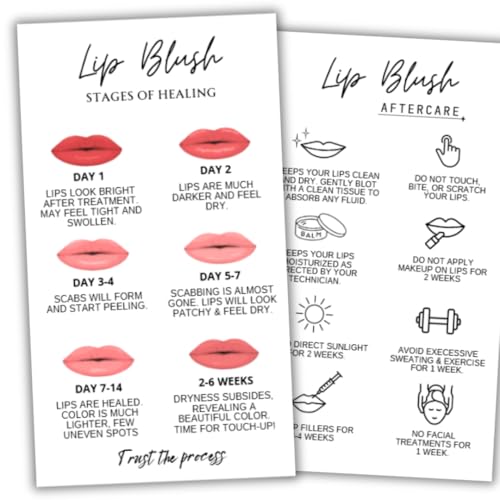
Understanding the healing process helps you avoid panic during the first week. Lip blushing healing happens in stages, and the lips will look different from day to day.
Day-by-Day Healing Overview
- Days 1–2: Lips are swollen, tender, and vibrantly colored. The pigment appears much darker than the final result.
- Days 3–5: Swelling subsides. Lips may feel dry and begin to flake or peel. Color starts to lighten.
- Days 6–10: Peeling continues. Some patches may look uneven — this is normal and not the final result.
- Weeks 2–4: Lips continue to settle. Color may appear slightly muted or patchy as the skin regenerates.
- Weeks 4–6: The color stabilizes into its true healed shade. This is when the touch-up is typically scheduled.
Aftercare Essentials
Following your artist's aftercare instructions is the single biggest factor in how well your lip blushing heals. General guidelines include:
- Keep lips moisturized with the aftercare balm provided by your artist
- Avoid picking or peeling flaking skin
- Skip spicy, salty, and acidic foods for the first few days
- Avoid direct sun exposure on the lips and use SPF once healed
- Do not apply makeup or skincare products directly on the lips during the initial healing phase
- Avoid swimming pools, saunas, and intense workouts for the first week
If you experience unusual swelling, blistering, or signs of infection, contact your artist and a healthcare professional promptly. Most reactions are mild and resolve on their own, but it is always better to check.
Results & Longevity
Healed lip blushing results are typically soft, natural, and flattering. How long they last depends on several factors:
- Skin type: Oily skin tends to break down pigment faster than dry skin
- Lifestyle: Sun exposure, smoking, and frequent exfoliation accelerate fading
- Aftercare: Clients who follow aftercare instructions tend to retain color longer
- Pigment choice: Lighter, more natural pigments may fade more gracefully than heavily saturated ones
Most clients return for a touch-up every 18 to 36 months to maintain the color. Some prefer annual refreshes for a consistently crisp look, while others let the color fade completely and then rebook a fresh session. If you enjoy exploring makeup looks, you can continue to layer lipstick, lip gloss, or lip stain over healed lip blushing to change the effect.
For those interested in adjacent semi-permanent treatments, our guides on laminated brows and laminated eyebrows explain how brow lamination compares to tattooing, which is a helpful parallel if you are building a low-maintenance beauty routine.
Risks, Safety & Considerations
Lip blushing is generally considered safe when performed by a trained, licensed artist using sterile equipment. Still, it is a cosmetic tattoo, and it carries normal risks associated with any skin-penetrating procedure. Potential considerations include:
- Mild swelling, redness, and tenderness in the first few days
- Cold sore reactivation in people with a history of herpes simplex
- Uneven color or fading that requires additional touch-ups
- Allergic reaction to pigment or numbing agents (rare but possible)
- Infection if aftercare instructions are not followed
To minimize risk, verify the artist's training, ask about their sterilization practices, and request to see healed results — not just fresh tattoos. Fresh photos can look very different from healed outcomes. A reputable artist will be transparent about their process and happy to answer questions.
If you have a compromised immune system, are pregnant, or are breastfeeding, consult a healthcare professional before booking. Our disclaimer and contact pages provide more information about how we approach health-related content.
What Affects the Investment
Lip blushing sits in the premium tier of semi-permanent makeup services. The overall investment varies based on the artist's experience, geographic market, and whether a touch-up is included in the initial booking. Artists in the mid-range tier typically offer solid technical skill and hygienic studios, while top-tier artists often command higher rates for advanced color theory and a refined aesthetic.
Rather than focusing on the lowest entry-level option, prioritize an artist whose portfolio matches your desired result and whose hygiene standards are verifiable. A poorly executed lip blush can require corrective work from a more experienced artist, which ultimately costs more than choosing the right artist the first time. When budgeting, remember to factor in the touch-up session, since most artists include it in a package or charge separately.
If you are exploring broader luxury beauty investments, our luxury skincare and luxury makeup guides discuss how higher-tier products position themselves in the market — a useful parallel for thinking about where to allocate beauty spending.
Frequently Asked Questions
How long does lip blushing last?
Lip blushing typically lasts between two and three years, depending on your skin type, lifestyle, sun exposure, and how well you follow aftercare instructions. A touch-up appointment four to eight weeks after the initial session helps refine and extend the results.
Does lip blushing hurt?
Most clients describe the sensation as mild to moderate discomfort. A topical numbing cream is applied before and during the procedure to keep pain manageable. The lips are a sensitive area, so some tingling and pressure are expected, but most people tolerate the session well.
Is lip blushing safe?
When performed by a certified and experienced permanent makeup artist using sterile, single-use needles and high-quality pigments, lip blushing is considered safe. Always verify the artist's credentials, hygiene standards, and portfolio before booking.
Who is not a good candidate for lip blushing?
Lip blushing may not be suitable for people who are pregnant or breastfeeding, have active cold sores or skin infections, are on certain medications such as blood thinners, have compromised immune systems, or have a history of keloid scarring. A consultation with a qualified artist or dermatologist can confirm your eligibility.
How long is the lip blushing healing process?
The initial healing phase lasts about seven to ten days, during which the lips may peel and feel dry. Full healing and color settling take around four to six weeks. A touch-up session is usually scheduled after the healing is complete.
Can I wear lipstick after lip blushing?
You should avoid applying makeup directly to the lips during the initial healing phase, which lasts about seven to ten days. Once the lips are fully healed and your artist confirms it is safe, you can wear lipstick, lip gloss, or lip balm as usual.
How should I prepare my lips before the appointment?
Exfoliate gently and keep lips hydrated in the weeks leading up to your appointment. A lip oil for dry lips or a lip balm for dry lips can help. Avoid lip fillers or other lip treatments too close to your appointment, and let your artist know about any medications or cold sore history.
Ready to Explore Lip Blushing?
Now that you understand the procedure, healing process, and what to expect, you are ready to research qualified artists in your area and book a consultation. A thorough consultation is the best next step before committing to any appointment.
EXPLORE MORE BEAUTY GUIDES