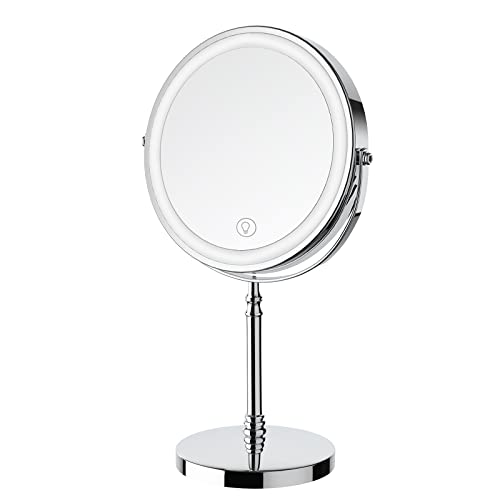
LED Makeup Mirror With Lights: The Complete Buying Guide
Understand how lighting, mirror size, magnification, and build quality affect makeup application — so you can choose a lighted vanity mirror that genuinely improves your routine.
Why a lighted mirror changes everything: The quality of your lighting determines how accurately you see color, texture, and blend. A well-designed LED makeup mirror with lights eliminates the guesswork that comes from applying makeup in dim bathroom lighting, helping you achieve a consistent, natural-looking finish every time.
What to Look For in a Lighted Makeup Mirror
If you have already decided that a lighted mirror belongs in your routine, the next step is understanding which specifications matter and which are marketing noise. The following guide breaks down the features that directly influence your daily experience — from the color temperature of the LEDs to the type of magnification built into the glass.
For a broader overview of mirror styles and accessories, our makeup mirror guide covers conventional designs that pair well with dedicated lighting. Readers comparing illuminated formats should also review the differences between a lighted makeup mirror with lights and newer LED-integrated designs before committing to a purchase.
Light Color Temperature
The best models offer adjustable color temperatures — typically daylight, cool white, and warm white — so you can preview makeup under different lighting conditions.
Even Light Distribution
Look for LED strips that wrap around the mirror perimeter. Uniform light prevents shadows on the face, which is essential for accurate foundation and concealer blending.
Magnification Options
A 1x main mirror with a 5x to 10x magnifying section covers detailed work like brows and eyeliner without distorting your overall view.
Adjustable Brightness
Dimmable LEDs let you reduce intensity for evening routines and increase brightness for precise daytime application. Touch controls are the most convenient option.
Power Source
Corded models deliver consistent brightness, while rechargeable or battery-powered mirrors offer portability. Consider where you will place the mirror before choosing.
Build and Finish
Frames in matte metal, brushed nickel, or solid plastic with weighted bases resist tipping. A stable base matters more than decorative detailing for daily use.
Mirror Tiers: Entry-Level to Luxury
Lighted mirrors are available across a wide spectrum of quality. Rather than focusing on any single specification in isolation, it helps to understand how models are positioned in the market. The table below summarizes the typical characteristics of each tier so you can align your expectations with your needs.
| Tier | Typical Characteristics | Best For |
|---|---|---|
| Entry-Level | Single light mode, fixed brightness, compact mirror size, basic plastic frame, often battery-powered. | Occasional use, travel, or a first lighted mirror for simple daily routines. |
| Mid-Range | Adjustable brightness, two or three color temperatures, rechargeable battery or corded option, removable magnifying spot mirror. | Daily makeup application for users who want reliable lighting without premium extras. |
| Premium | Touch controls, three color temperatures, high CRI LEDs, larger mirror surface, integrated magnification panel, weighted base with metal finish. | Enthusiasts and professionals who need accurate color rendering and flexible lighting. |
| Luxury | Wide format vanity design, fully dimmable LEDs with memory function, high color rendering index, premium materials, smart features or built-in Bluetooth. | Dedicated vanity setups where the mirror is a permanent focal point of the room. |
As a general rule, mid-range models usually offer a noticeably more even light distribution than entry-level designs, while premium and luxury mirrors add higher color rendering and more granular brightness control. If you are comparing related illuminated formats, our guide to LED vanity lights for mirrors explains how separate lighting fixtures compare with integrated LED mirrors.
Understanding Light Modes and Color Rendering
Color rendering — often expressed as CRI — describes how faithfully a light source reveals the true colors of objects. For makeup application, this matters enormously: a mirror with low color rendering can make a foundation look like a perfect match under its own light, only to appear mismatched in daylight.
Three color temperature modes are the most practical configuration for most users:
- Daylight (around 5000K–6000K): The closest approximation of natural outdoor light and the most reliable mode for matching foundation and concealer to your skin tone.
- Cool White (around 4000K): Useful for checking how makeup appears in office or retail lighting, where cooler tones are common.
- Warm White (around 3000K): Ideal for previewing evening looks, since warm ambient lighting is typical in restaurants and event venues.
Higher-tier mirrors often specify a CRI above 90, which is a strong indicator of accurate color representation. If the specification is not listed, reviews from users who apply makeup professionally are a useful proxy. For readers exploring similar illuminated formats, the comparison of a make-up mirror with lights against LED-integrated models can clarify which configuration suits your vanity space.
Choosing the Right Magnification
Magnification is one of the most misunderstood features of a lighted makeup mirror. Higher numbers are not automatically better — the right choice depends on what you need to see.
- 1x (no magnification): Your primary view for overall application, blending, and checking symmetry. Every mirror should offer a clear 1x surface.
- 5x: A balanced magnification for brows, eyeliner, and lip lining without excessive distortion. Suitable for most users.
- 10x: Detailed work such as individual lash application, precise brow shaping, and spot-checking blemishes. Requires holding your face close to the mirror.
- 15x and above: Specialist use only. At this level, the viewing area is very small and the image is easily distorted unless you are perfectly positioned.
Many mirrors include a removable spot mirror that attaches magnetically to the main surface. This approach gives you magnification on demand without occupying permanent space. When shopping for vanity configurations, our overview of a makeup vanity mirror with lights explains how magnification and lighting work together in larger furniture-style setups.
Placement, Setup, and Daily Use
How you position your lighted mirror has a direct effect on how useful it is. A few practical guidelines:
- Height: The center of the mirror should sit roughly at eye level. Looking down or up changes the perceived shape of your face and can lead to uneven application.
- Distance: Position the mirror about an arm's length away for general application and closer for detailed work with magnification.
- Ambient light: Even the best LED mirror benefits from a dimly lit room. Strong overhead lighting can wash out the mirror's effect and create conflicting color casts.
- Power management: Corded models should be placed near an outlet to avoid extension cords; rechargeable models should be charged fully before first use and stored upright.
If you plan to build a complete vanity station, our guide to a makeup vanity with lights covers furniture, seating height, and storage considerations that complement a lighted mirror.
Common Mistakes to Avoid
Even a well-chosen mirror can underperform if used incorrectly. The most frequent issues buyers report include:
- Relying on a single light mode: Applying makeup only under warm light can produce a look that appears overdone in daylight. Cycle through modes to verify your result.
- Ignoring the CRI specification: A bright mirror with low color rendering is worse than a dimmer mirror with accurate color, because it creates false confidence in color matching.
- Over-magnifying: Using 10x magnification for full-face application distorts proportions and leads to over-correction. Reserve high magnification for targeted detail work.
- Skipping the base check: Lightweight bases tip easily during daily use. A weighted or wide base is a practical necessity, not a luxury.
- Ignoring glare: Exposed LED strips without diffusion can produce harsh reflections. Diffused lighting around the perimeter is generally more comfortable for extended sessions.
Readers who prefer a broader category overview before narrowing down to a specific model may find the comparison of a makeup mirror with LED lights versus conventional lighted models useful for setting expectations.
Who Benefits Most From an LED Makeup Mirror
A lighted mirror is not a necessity for everyone, but several groups see clear, immediate benefits:
- Daily makeup wearers: Consistent, accurate lighting shortens application time and improves results, particularly for foundation and concealer.
- Contact lens wearers: The combination of magnification and bright, even light makes insertion and removal easier and safer.
- Skincare-focused users: Detailed inspection of skin texture, blemishes, and product absorption is far easier under controlled lighting.
- Professionals and enthusiasts: Makeup artists and content creators benefit from adjustable color temperatures and high color rendering for photography and client work.
- Travelers: Compact rechargeable LED mirrors offer a portable solution for hotel rooms with unreliable bathroom lighting.
If you are assembling a complete tool kit, our guide to makeup artist tools covers brushes, organizers, and other accessories that pair naturally with a lighted mirror station.
Ready to Choose Your Lighted Mirror?
Browse our curated selection of LED makeup mirrors and compare features side by side before you buy.
View Recommended MirrorsFrequently Asked Questions
Before purchasing, review our disclaimer and affiliate disclosure for full transparency about how we evaluate products. If you have questions about our methodology, please contact us.