Eyebrow Shaping: The Complete Guide to Perfect Brows
Learn how to map, shape, and maintain your eyebrows like a professional. This guide covers face-shape matching, step-by-step techniques, tool selection, and product tiers so you can choose the right brow routine before you buy.
Start Shaping Your BrowsWhy Eyebrow Shaping Makes a Difference
Eyebrows are one of the most expressive features on the face. Their shape, thickness, and arch height can subtly change the perceived proportions of your forehead, cheekbones, and jawline. For many people, over-plucked or uneven brows are a source of daily frustration. Learning proper shaping techniques gives you control over your look and helps you avoid the thin, patchy brows that result from over-grooming.
Beyond aesthetics, shaped brows also improve how makeup sits on the face. A defined brow gives eye makeup for brown eyes or eye makeup for blue eyes a clean frame to work against. If you wear mascara for sensitive eyes or eyeliner, balanced brows keep the focus on your eyes rather than on stray hairs. For readers exploring eyebrow styling gel or eyebrow threading, this foundational guide will help you understand what shape you are aiming for before you invest in any service or product.
Choosing the Right Brow Shape for Your Face
There is no single "correct" eyebrow shape. The best shape works with your bone structure rather than against it. Use the guide below as a starting point, then adjust based on your personal style and how much maintenance you are comfortable with.
Round Face
Choose a defined arch with a slight angle. A soft, high arch adds visual length and prevents the face from looking too circular. Avoid completely flat brows.
Square Face
Go for a soft, rounded arch with a gentle curve. This balances a strong jawline. Avoid sharp, angular peaks that emphasize squareness.
Oval Face
Most shapes work well. A gentle arch that follows the natural brow bone is universally flattering. Keep the brow proportionate to your features.
Long Face
A flatter, more horizontal brow with minimal arch helps shorten the face visually. Keep the tail slightly extended for balance.
Heart Face
Soft, rounded arches with a slightly shorter tail complement a wider forehead and narrower chin. Avoid overly thick brows that dominate the face.
Diamond Face
A curved arch with a strong tail draws attention away from a narrow forehead and chin. Keep the brow full but not heavy.
If you are considering more advanced options such as eyebrows microblading or eyebrow lamination, first understand your natural shape and growth pattern. These services enhance what you already have—they are not a substitute for knowing your ideal brow map. Similarly, eyebrow waxing and eyebrow tint work best when you have a clear shape in mind before your appointment.
How to Shape Your Eyebrows: Step-by-Step
Follow this professional mapping and shaping sequence. Work slowly and remove only a few hairs at a time—it is always easier to remove more than to wait for regrowth.
- Map the three key points. Hold a brow pencil vertically against the inner corner of your eye to mark where the brow should start. Angle the pencil from the outer edge of your iris to find the arch peak. Angle from the outer corner of your eye to mark where the brow should end.
- Outline your desired shape. Using a light brow pencil, sketch the top and bottom lines of your ideal brow. This outline acts as a guide so you do not over-pluck. Step back from the mirror regularly to check symmetry.
- Brush hairs upward. Use a spoolie brush to comb brow hairs upward. This reveals the natural growth direction and highlights stray hairs outside the outline.
- Trim long hairs. Use small brow scissors to snip any hairs that extend beyond the top of your brow line after brushing upward. Trim conservatively—never cut across the whole brow.
- Pluck outside the outline. Using slanted tweezers, remove only the hairs outside your pencil outline. Pluck in the direction of hair growth and use a magnifying mirror. Work one brow at a time and compare both before continuing.
- Check and refine. Step back and view your brows at eye level in a normal mirror. Make small adjustments only. Fill any sparse areas with a brow pencil that matches your hair color.
- Set with brow gel. Finish with a clear or tinted brow gel to hold the shape and add definition. This is especially useful for coarse or unruly brow hair.
Eyebrow Shaping Techniques Compared
There are several ways to remove hair and shape brows. The right method depends on your skin sensitivity, pain tolerance, and how much time you want to spend on maintenance.
| Technique | Best For | Precision | Maintenance |
|---|---|---|---|
| Plucking (Tweezing) | At-home touch-ups and shaping | High—you control each hair | Every 2–4 weeks |
| Waxing | Fast, full-brow cleanup | Medium—less control at the arch | Every 3–4 weeks |
| Threading | Precise arches and defined tails | Very high—ideal for detailed shapes | Every 2–4 weeks |
| Razoring | Quick removal of fine stray hairs | Medium—best for surface hair only | Every few days |
| Sugaring | Gentle removal for sensitive skin | Medium to high | Every 3–4 weeks |
If you have sensitive skin around the eyes, patch-test any wax or tint product first. Readers dealing with eye pencil for sensitive eyes or eye primer for oily eyelids may also be sensitive to aggressive brow removal—threading or plucking is often gentler than waxing.
Essential Tools and Product Tiers
You do not need a large collection of products to shape brows well. A small set of quality tools is more effective than many low-quality items. Below, products are grouped by relative market tier so you can match your choice to your budget and experience level.
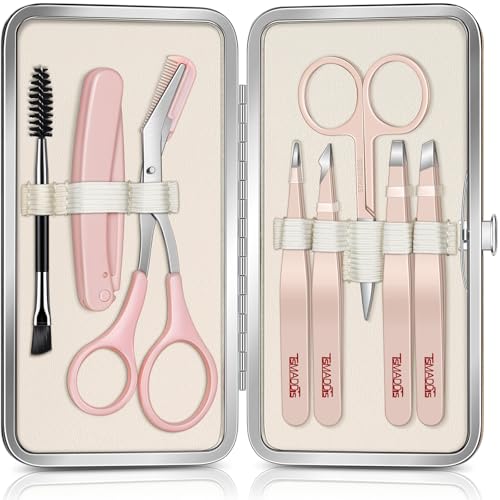
- Entry-level / budget-friendly: Basic slanted tweezers, a spoolie brush, and a drugstore brow pencil. These are ideal for beginners learning to map and shape. Look for stainless steel tweezers with a precise tip.
- Mid-range / mid-tier: Precision tweezers with a built-in light or magnifier, small brow scissors, and a brow pencil with a fine tip and attached spoolie. This tier offers better control and durability for regular home shaping.
- Premium / high-end: Professional-grade tweezers, angled brow scissors, a dual-ended brow pencil with a precise micro-tip, and a tinted brow gel. These tools hold their edge longer and are often preferred by people who shape brows weekly.
- Luxury / top-tier: Full brow grooming kits with a magnifying mirror, stainless steel precision tools, and a brow setting gel with a fine brush. This tier suits readers who want a complete, long-lasting kit and are comfortable investing in durable tools.
In addition to shaping tools, consider a brow gel or styling wax to hold the shape. For readers who also groom lashes, mascara for sensitive eyes and a lash curler can complement a well-defined brow without overloading the eye area. A makeup mirror with magnification is one of the most useful investments for precise brow work at home.
Maintaining Your Shape Between Sessions
Once you have established your shape, maintenance becomes much easier. Aim for a light touch-up every two weeks rather than a full re-shape. Remove only hairs that are clearly outside your mapped outline. This preserves your shape and avoids the cycle of over-plucking.
If you have sparse or thinning brows, a brow styling gel can add temporary fullness, while a brow serum or growth-focused product may support longer-term density. For those considering semi-permanent options, microblading and brow lamination are worth researching after you know your ideal shape. Always prioritize your natural brow growth pattern—over-grooming is the most common cause of thin brows.
Common Eyebrow Shaping Mistakes to Avoid
Many brow problems come from a few avoidable habits. The most common mistakes include over-plucking the arch, making both brows too thin, using dull tweezers that break hairs, and shaping wet brows (hair is stretched when wet and can look shorter after drying). Another frequent issue is ignoring the natural brow bone and forcing an arch too high or too flat. Always work with your bone structure and check your progress in a normal mirror, not only a magnified one.
If you wear foundation or face primer, avoid applying heavy product directly onto the brow hairs—this can make brows look flat and cause shaping mistakes to be more visible. Instead, apply base makeup around the brow and fill the brow separately with a dedicated brow pencil or powder.