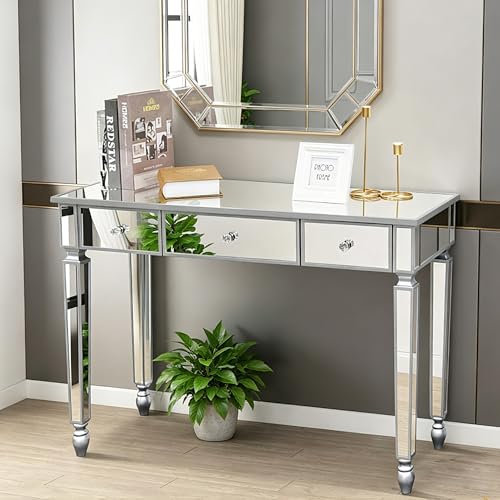
Mirrored Dressing Table With Mirror: The Complete Buying Guide
Everything you need to know about choosing, styling, and maintaining a mirrored dressing table with mirror — from frame materials and lighting to storage and placement.
Why mirrored dressing tables matter: A mirrored dressing table with mirror is more than furniture — it is a daily grooming station, a light-enhancing design feature, and a statement piece that makes a bedroom feel considered and calm. This guide walks you through every decision so you can choose a model that fits your space, your routine, and your long-term needs.
What Is a Mirrored Dressing Table With Mirror?
A mirrored dressing table with mirror is a vanity desk finished with reflective glass panels across its surfaces and paired with a mirror — either attached, integrated, or freestanding. The reflective finish bounces natural and artificial light around the room, which makes compact bedrooms feel brighter and more open. It also creates a clean, glamorous visual language that works with modern, art deco, and minimalist interiors alike.
Most models combine three functions in one footprint: a flat grooming surface for makeup and skincare, drawers or shelves for organizing products, and a mirror positioned at seated eye level. That combination is what separates a true dressing table from a simple desk with a mirror propped on top. If you are still building out your beauty corner, our guide to makeup mirrors explains how mirror shape, magnification, and lighting affect daily use.
Because the reflective finish is the defining feature, quality varies widely. Entry-level models often use thin glass panels over engineered wood, while mid-range and premium pieces use thicker mirrored glass, reinforced backing, and solid wood or metal frames. Understanding those differences is the single most useful step before you buy.
Why Choose a Mirrored Vanity?
The appeal of a mirrored vanity is practical as much as aesthetic. Mirrors amplify light, which is especially valuable in bedrooms with a single window or in apartments where overhead lighting is the only source. Better light means more accurate makeup application and a more comfortable grooming routine.
Reflective surfaces also create a sense of depth. In a small room, a mirrored table and mirror can visually double the perceived space without adding a single square foot. That is why compact mirrored models are consistently popular in city apartments and guest bedrooms.
Finally, a mirrored dressing table is a design anchor. It reads as intentional and finished, even in a room with simple furniture. If you want to build a cohesive beauty routine around your vanity, pairing it with thoughtful organization and the right tools — from beauty storage solutions to a curated brush set — turns the table into a genuinely useful station rather than pure decoration.
Key Features to Compare Before You Buy
Frame Material & Build
Solid wood and powder-coated metal frames hold alignment best over time. Engineered wood is common in budget-friendly models but benefits from reinforced corners and a sturdy back panel. Check that the mirror is properly backed to prevent distortion.
Mirror Quality
Thicker mirrored glass with a sealed backing resists edge oxidation and clouding. Bevelled edges look refined but need careful handling. Confirm the mirror is actual glass rather than acrylic, which scratches easily and distorts over time.
Drawers & Compartments
Soft-close drawers protect glass and reduce noise. Shallow divided drawers suit makeup and skincare, while deeper drawers fit haircare tools. Consider whether you need open shelves for frequently used items.
Built-In or Ambient Light
Models with integrated LED lighting offer consistent illumination for makeup application. If you choose a non-lit model, plan for a nearby window or a diffused lamp that lights your face evenly rather than from directly above.
Footprint & Clearance
Measure wall width and floor clearance before ordering. You need room to pull out a stool and to lean toward the mirror comfortably. Compact models suit small bedrooms; wide models with side drawers suit dedicated dressing areas.
Stability & Anchoring
Tall or narrow mirrored tables should be anchored to the wall, especially in homes with children or pets. Check that feet are level and that the mirror is securely mounted rather than simply resting against the frame.
Mirrored Dressing Table Styles Compared
Not every mirrored table suits every room. The table below compares the most common configurations so you can match style to space and routine.
| Style | Best For | Storage | Considerations |
|---|---|---|---|
| Compact single-drawer | Small bedrooms, apartments | Minimal — one shallow drawer | Space-efficient; pair with wall-mounted or slim mirror |
| Three-drawer vanity | Everyday makeup and skincare users | Moderate — divided shallow drawers | Most versatile mid-range option |
| Wide dressing table with side storage | Dedicated dressing rooms | Generous — multiple drawers plus shelves | Needs wall width and clear floor clearance |
| Corner mirrored vanity | Awkward floor plans, tight corners | Small to moderate | Angled mirror improves visibility; limited surface area |
| Mirror with integrated LED lighting | Low-light rooms, precise makeup work | Varies by base | Requires power access; premium tier pricing |
| Freestanding mirror + separate table | Renters and flexible layouts | Depends on the table chosen | Easiest to rearrange; mirror must be stabilized |
How to Choose the Right Size and Placement
Placement determines how usable a mirrored dressing table actually is. Start with the wall: measure the width you can dedicate and subtract clearance for drawers to open fully. Then measure the depth — you want enough surface for a tray of daily products without crowding the mirror.
Mirror height matters more than most buyers expect. When you sit on your stool, the center of the mirror should sit roughly at eye level. If the mirror is too low you will hunch; too high and you will lose detail. Models with adjustable or tilting mirrors solve this, and a professional makeup mirror with lights is worth considering if precision is a priority.
Position the table so light falls on your face rather than behind you. A side window or a lamp placed slightly to one side of the mirror gives the most flattering and accurate light. Avoid placing the vanity directly opposite a bright window unless you want strong backlighting, which flattens facial features in the mirror.
- Measure wall width, floor depth, and stool pull-out clearance.
- Confirm seated eye level against mirror center height.
- Check that at least one light source reaches your face, not your back.
- Verify drawer clearance so nothing collides with nearby furniture.
- Anchor tall or narrow models to the wall for safety.
If floor space is genuinely limited, a small vanity desk with mirror or a wall-leaning design such as a mirror with easel can deliver the same function in a smaller footprint.
Materials and Finish Quality
Mirrored furniture lives or dies by its finish. The glass itself should be cleanly cut with no visible waviness or dark edges. A bevelled edge catches light and looks premium, but it also needs protective framing so it does not chip during moves or daily use.
Behind the glass, the backing matters. Quality pieces use sealed backing that resists moisture infiltration, which is the main cause of the dark "foxing" that appears along mirror edges over time. Humid bathrooms are a poor location for mirrored dressing tables for exactly this reason — a bedroom with stable humidity is far better.
Frame joins should be tight and aligned. On metal frames, check that welds or fasteners are smooth. On wood frames, look for consistent paint or lacquer and reinforced corner blocks. Drawers should slide without wobble; soft-close runners are a meaningful upgrade in the mid-range tier and above.
Lighting Your Mirrored Vanity
Mirrors double the light in a room, which is both an advantage and a caution. Direct overhead lighting reflected in a mirror creates harsh shadows under the eyes and nose — exactly where you need to see clearly. The solution is diffused, front-facing light.
If your table does not include built-in lighting, add a soft lamp positioned at roughly face height to one side of the mirror. Warm-to-neutral white bulbs in the 3000K to 4000K range give a natural look without the yellow cast of warmer bulbs. Avoid colored bulbs entirely if you use the mirror for makeup, since they misrepresent skin tone.
For models without lighting, a floor lamp or a pair of small table lamps flanking the vanity is a classic solution. If you prefer an integrated approach, smart mirrors combine lighting with adjustable brightness and are increasingly common in mid-range and premium vanities. Whichever route you choose, test the lighting from a seated position before committing — the goal is even illumination across your whole face.
Organizing Your Dressing Table
A mirrored table shows everything, so organization is visible organization. That is a strength if you plan it well and a source of clutter if you do not. Start by separating daily essentials from occasional items, then give each category a home.
Shallow divided drawers work best for makeup and skincare. Keep frequently used products within arm's reach and store backups and seasonal items deeper or higher. Open shelves are ideal for items you want to display and grab quickly, but they should be curated rather than crowded.
On the surface itself, use a tray or a small organizer to contain the items you reach for every day. That keeps the reflective surface visible, which is the whole point of choosing a mirrored design. Pairing your vanity with a makeup bag or a travel case lets you pack and unpack quickly without disturbing the arrangement.
Finally, protect the mirror from products. Spilled liquids and aerosol sprays can leave residue on glass edges that is difficult to remove. Keep open bottles on a tray rather than directly on the mirrored top, and wipe spills immediately.
Care, Cleaning, and Long-Term Maintenance
Mirrored furniture is easy to maintain once you know the right routine. Dust the frame and glass weekly with a soft microfiber cloth. For glass, apply a streak-free cleaner to the cloth rather than spraying directly onto the mirror — this prevents liquid from seeping behind the glass edge and degrading the backing.
Avoid abrasive pads, scouring powders, and solvent-heavy cleaners, all of which can scratch the reflective coating or dull the frame finish. For stubborn marks, a slightly damp cloth followed by a dry microfiber pass is usually sufficient.
Keep the table away from excessive humidity and direct heat sources. If you live in a humid climate, run a dehumidifier in the room during peak months and keep the vanity away from bathroom doors and windows that collect condensation. With reasonable care, a well-made mirrored dressing table will hold its finish for many years.
- Dust weekly with a soft microfiber cloth.
- Apply glass cleaner to the cloth, not the mirror.
- Avoid abrasive pads and solvent cleaners.
- Keep spills off the mirrored surface — use a tray.
- Maintain stable humidity and avoid direct heat.
Common Mistakes to Avoid
Most disappointing purchases come down to a handful of avoidable errors. The first is buying for looks before measuring. A mirrored table that does not leave room to pull out a stool, or that crowds a doorway, will be frustrating no matter how attractive it is.
The second is ignoring lighting. Buyers often assume a mirrored table will make the room brighter and stop there, without planning where usable face-level light will come from. A beautiful vanity in a shadowed corner is a beautiful vanity you will not enjoy using.
The third is underestimating storage. If you have a substantial daily routine, a single shallow drawer will not hold it. Plan for the volume of products you actually use, not the idealized minimal version of your routine.
Finally, do not skip anchoring. Tall, narrow, or top-heavy mirrored tables should be secured to the wall. It takes minutes and prevents the most serious type of accident associated with furniture of this shape.
Frequently Asked Questions
What is a mirrored dressing table with mirror?
A mirrored dressing table with mirror is a vanity desk finished with reflective glass panels and paired with a mirror. It combines storage, a grooming surface, and a statement furniture piece that reflects light to make a bedroom or dressing area feel brighter and more spacious.
How do I choose the right size mirrored dressing table?
Measure your available floor space and wall width first. Compact models suit small bedrooms, while wide tables with drawers suit dedicated dressing rooms. Leave enough clearance to pull out a stool and reach the mirror comfortably, and check that the mirror height matches your seated eye level.
Are mirrored dressing tables suitable for small rooms?
Yes. Mirrored surfaces reflect light and visually expand a room, making them a smart choice for compact bedrooms. Choose a slim model with a single drawer and a wall-mounted or slimmer mirror to avoid overwhelming a small space.
How do I clean and maintain a mirrored dressing table?
Dust the frame regularly with a soft cloth and clean glass panels with a streak-free glass cleaner applied to a microfiber cloth rather than sprayed directly. Avoid abrasive pads and harsh solvents, and keep the table away from excessive humidity to protect the backing.
Does a mirrored dressing table need special lighting?
Good lighting is essential because mirrors amplify both light and shadow. Position the table near a window or add soft, diffused light that hits your face evenly. A mirror with built-in LED lighting offers the most consistent illumination for makeup application.
Final Checklist Before You Buy
A mirrored dressing table with mirror is a long-term purchase, so a few minutes of preparation saves months of regret. Use this checklist as a final pass before you commit:
- Measured wall width, floor depth, and stool clearance.
- Confirmed mirror center sits near your seated eye level.
- Planned a diffused, face-level light source.
- Matched drawer and shelf capacity to your actual routine.
- Checked frame material, mirror thickness, and edge sealing.
- Verified stability and planned wall anchoring if needed.
- Chosen a finish that suits your room's existing palette.
Once those boxes are ticked, you are ready to choose confidently. If you want to explore the broader category of vanity mirrors and reflective furniture before deciding, our makeup mirror guide and freestanding mirror guide cover the adjacent options in more depth.